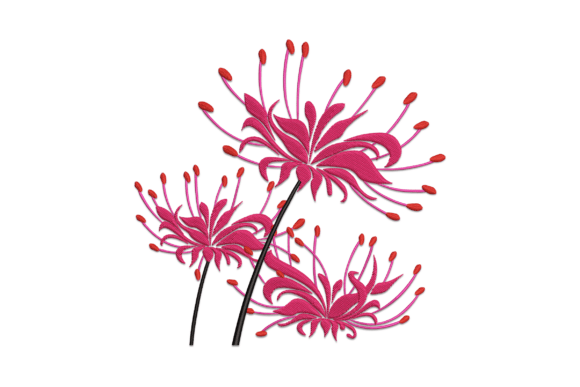
Red Spider Lily: A Designer’s Review
As a designer who spends more time staring at stitch maps than finished garments, I have learned that not all floral designs are created equal. Some are too dense for delicate fabrics, while others lack the definition needed to stand out on dark textiles. When I first loaded the Red Spider Lily machine embroidery design into my software, I was immediately struck by its architectural elegance. This is not your typical garden rose or simple daisy. The spider lily, with its long, curling stamens and slender petals, presents a unique challenge for digitizers. It requires a balance of fluidity and precision.
I approached this review with a specific project in mind: a custom tote bag for a local botanical shop. The client wanted something sophisticated, slightly mysterious, and undeniably eye-catching. The Red Spider Lily fit the brief perfectly, but I needed to verify if it could hold up under real-world stitching conditions. Here is my practical assessment of how this design performs in a professional embroidery environment.
First Impressions and Visual Impact
The immediate mood this design creates is one of dramatic elegance. In the category of Single Flowers Plants, many designs feel static or overly symmetrical. However, the Red Spider Lily captures the organic, almost wild movement of the actual flower. The layout allows the long stamens to extend outward, creating a dynamic silhouette that works well even when scaled down.
For an Etsy seller or small shop product creator, visual appeal is everything. This design has high recognition value. It does not look like generic clipart converted into stitches. The intricate details suggest a high level of craftsmanship, which can directly influence customer trust and perceived value. When used as a central motif on a tote bag design or a pillow cover, it commands attention without needing excessive embellishment.
Performance in Real-Life Embroidery Projects
I tested the design on several mediums to gauge its versatility. Here is how it performed across different applications:
- Sweatshirt Embroidery: On a heavyweight cotton blend, the design held its shape beautifully. The fill stitch areas provided enough coverage to prevent the fabric from showing through, while the satin stitch outlines kept the petals crisp. It made for a stunning piece of custom apparel that felt premium to the touch.
- Tote Bags and Canvas: This is perhaps the ideal home for this design. The sturdy texture of canvas supports the stitch density required for such intricate details. The red thread popped vibrantly against natural beige canvas, creating a striking contrast that appeals to buyers looking for unique handmade products.
- Embroidered Patches: I ran the design on twill with a heavy cut-away stabilizer. The result was a clean, professional patch suitable for iron-on application. The long stamens did not fray or lose definition, which is often a risk with thin, extending elements in applique design or standard embroidery.
For those creating holiday embroidery gifts or personalized gifts, this design offers a sophisticated alternative to traditional seasonal motifs. It works exceptionally well for autumn-themed collections or gothic-inspired boutique branding.
Technical Considerations and Fabric Choices
While the design is robust, it is not without its technical demands. As an experienced reviewer, I must highlight where caution is necessary. The intricate nature of the spider lily means that stitch density plays a critical role. If you are working with thin or stretchy fabric, such as a lightweight jersey t-shirt or silk blouse, you must use the appropriate stabilizer. A tear-away stabilizer may not provide enough support for the finer details, potentially leading to puckering.
For baby embroidery projects, I would advise testing the design on scrap fabric first. While the aesthetic is beautiful, ensure that the back of the stitching is covered or softened if it will be against sensitive skin. Additionally, when working on curved surfaces like caps, the long, sweeping lines of the stamens need careful hooping to avoid distortion. Always check your hoop size compatibility before starting; while the description mentions multiple formats, confirming the maximum dimensions ensures the design fits your specific machine capabilities.
Dark fabrics present another consideration. The Red Spider Lily relies on contrast. If stitching on black or navy, ensure your red thread has enough sheen or brightness to stand out. I recommend testing different thread colors and brands, as some reds appear duller under machine lighting. A high-quality rayon or polyester thread can make the difference between a flat look and a vibrant, three-dimensional effect.
Enhancing Brand Consistency and Product Value
For craft business owners, consistency is key. This design lends itself well to a cohesive brand aesthetic. Whether you are selling digital embroidery file assets or finished goods, the professional quality of the digitizing reflects well on your brand. It suggests attention to detail and a commitment to quality.
When creating printable mockups for your online store, this design photographs exceptionally well. The distinct shapes create strong shadows and highlights, making your product images look more dynamic. This can significantly boost buyer engagement on platforms like Etsy, where visual clarity drives clicks.
Practical Designer Notes for Best Results
To get the most out of this Embroidery asset, follow these practical steps:
- Test on Scrap Fabric: Always run a test stitch-out on the same fabric type you intend to use for the final product. This helps you identify any tension issues or registration errors.
- Check Thread Contrast: Use a color wheel to select complementary or contrasting thread colors. For a monochromatic look, try varying shades of red, but ensure there is enough difference in value to distinguish the details.
- Review Stitch Density: If your machine struggles with dense areas, consider using a lighter weight thread or adjusting the tension slightly. However, do not alter the digitized file unless you are experienced in editing embroidery software.
- Confirm Licensing: Before selling finished items or design assets, confirm the licensing terms provided with the embroidery file. Most designers allow commercial use for finished physical products, but restrictions may apply to digital resale.
- Inspect Small Details: Zoom in on your machine’s preview screen. Check the tiny corners and the tips of the stamens. Ensure they are sharp and not clustered with excessive jumps or trims.
In conclusion, the Red Spider Lily is a standout choice for designers seeking a blend of elegance and complexity. It performs reliably across a range of commercial embroidery applications, from sweatshirt embroidery to home decor. By respecting the technical requirements of the design and choosing the right materials, you can create a finished product that not only looks professional but also resonates with customers seeking unique, high-quality handmade items. Whether you are a hobbyist looking to elevate your personal projects or a seasoned Etsy seller expanding your catalog, this design offers the versatility and visual impact needed to succeed in today’s creative market.